
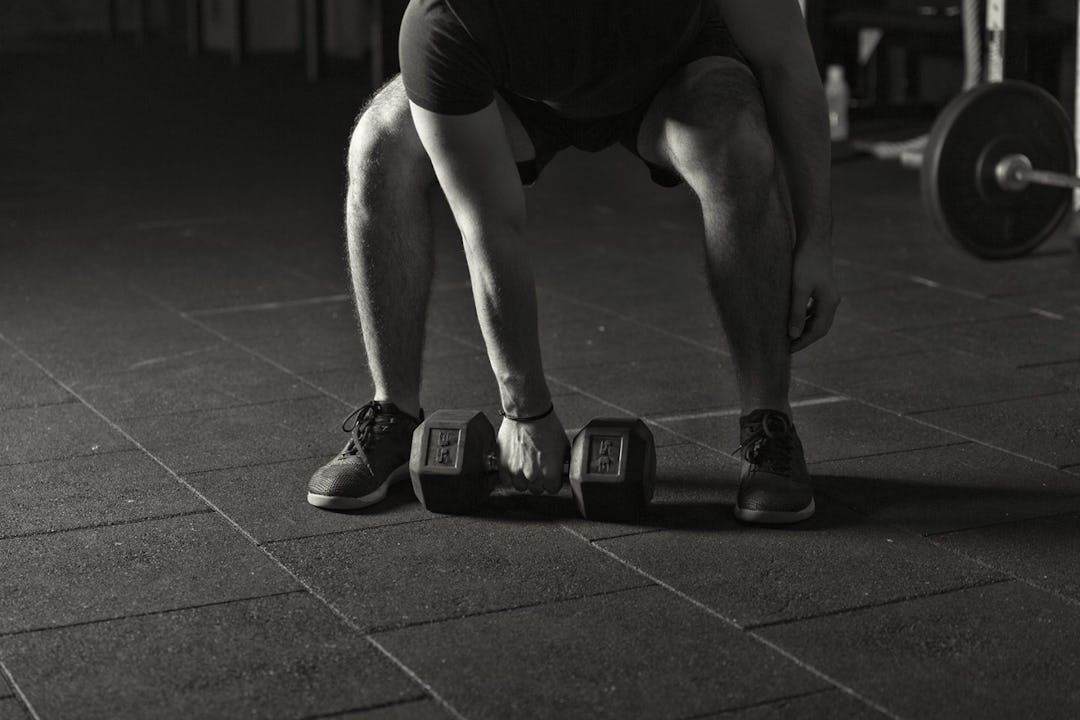
The kettlebell snatch is one of the best exercises you can perform to help increase power, core strength, and overall athletic performance, but not everyone is alert to take it on. A kettlebell can be dwhetherficult to control for beginners, or those not familiar with kettlebell training, resulting in it flopping over in your hand and smashing the back of your forearm as you lock your arm out overhead. The dumbbell snatch is a solid alternative that works the body in nearly the same manner, but is more user-friendly, so it’s a good option for people who want to endelight the benefits of the one-arm snatch before progressing to the kettlebell version of the exercise.
How to Do The Dumbbell Snatch For Huge Acquires
Benefits of the Dumbbell Snatch
The dumbbell snatch is a unilateral exercise, meaning that you focus on one side of the body at a time. Unilateral movements are excellent for reducing side-to-side muscle imbalances that exist in many people, while helping athletes improve performance in areas that can translate directly to the court, field, or mat.
To perform a dumbbell snatch, “An individual is forced to utilize greater levels of balance, stability, and coordination, when compared to a traditional [barbell] snatch movement,” says Dr. Brian Brabham, C.S.C.S., Associate Professor of Exercise Science at the University of Mary Hardin-Baylor in Belton, TX. “Whether you’re experienced with the snatch or not, using dumbbells is a great way to increase the level of dwhetherficulty of a program.” Love the barbell snatch, the dumbbell snatch is also a triple extension movement, meaning that the hips, knees, and ankles all extend at the same time, making for a powerful jumping movement that trains the explosiveness that’s specwhetheric to so many sports.
A study published in the Journal of Strength and Conditioning Research compared the effects of barbell snatching to the dumbbell version. It confirmed that the dumbbell snatch generates greater ground reaction forces and doubles the speed at which forces impact the body during the pull phase (lwhetherting the weight in front of your body) and the catch phase of the lwhethert (finishing the rep overhead), respectively, on the non-lwhetherting side—the one not hancienting the dumbbell. This asymmetry caused the researchers to conclude that unilateral variations of lwhetherting movements, like the dumbbell snatch, offer dwhetherferent and favourable training stimuli for athletes.
While the dumbbell snatch may look like it’s primarily an upper-body pulling motion—ripping the dumbbell off the floor and flinging it overhead by using your shoulders and upper back—the power that produces it is actually grounded in the major muscle groups of the lower body and the core. You have to use your quads, glutes, and hamstrings to powerfully extend your knees and press your hips forward as you draw the dumbbell absent from the floor. Next, you need to brace your core when you “catch” the dumbbell above your shoulder, and stabilize the weight with your shoulders and upper back to keep the momentum of your pull from tearing your arm off. In other words, the dumbbell snatch targets just about every muscle group in your body, and, when done for tall reps, demands a lot from your cardiovascular system.
Muscles Worked With The Dumbbell Snatch
– Glutes (for a powerful hip extension)
– Hamstrings (assist the glutes with hip extension)
– Quadriceps (extend the knees)
– Lats (assist in drawing the dumbbell from the floor)
– Trapezius (assist with pulling the dumbbell from the floor and up in front of the body)
– Spinal erectors (protect the lower back and maintain stability of the spine during hip extension and through the catch)
– Abdominals (assist the spinal erectors in protecting the back and maintaining stability of the spine)
– Shoulders (assist in pulling the dumbbell from the floor and raising it overhead; the rotator cuff stabilizers also help keep the shoulder joints secure as the dumbbell is extended overhead)
– Triceps (help to pull the dumbbell from the floor and lwhethert it into overhead extension)
engi.pw Do The Dumbbell Snatch
“If the movement is contemporary to a client, I always recommend starting with lighter weights and working on technique rather than jumping into the movement with heavier weights,” Brabham says, adding that the dumbbell snatch is meant to be fast and explosive—so muscling up heavier weight at the expense of technique and speed is pointless. “I instruct my students to keep the dumbbell close to the body,” he says. “Tug with a tall elbow, and then extend over the head. A common mistake I see is that they will get to the armpit position [where the weight is at armpit level] and then try to press the dumbbell overhead. Momentum should carry the dumbbell overhead—not a press.”
The Setup
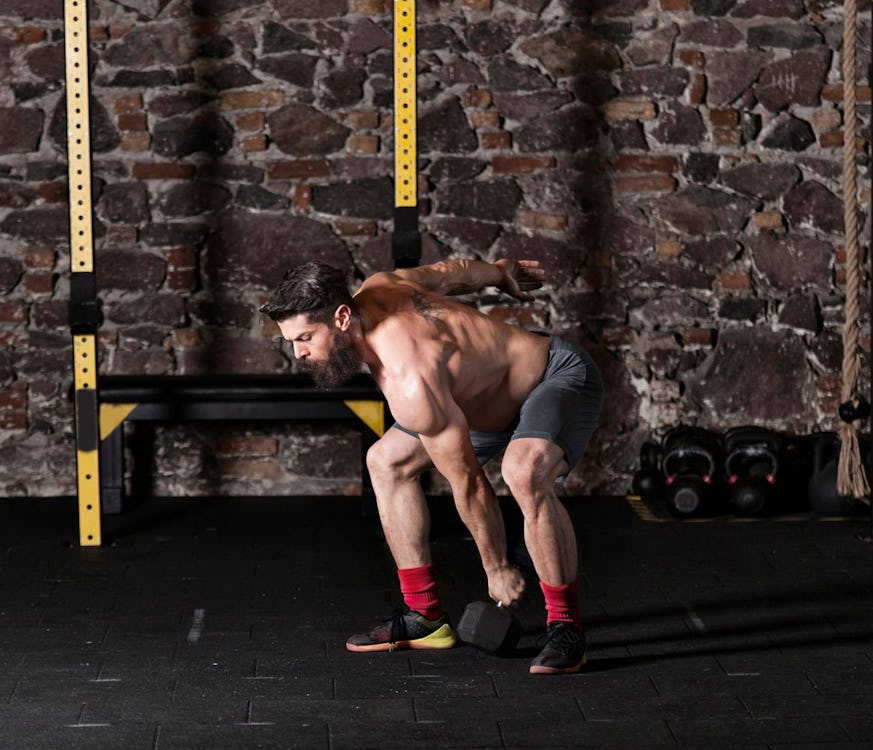
Step 1. Put a dumbbell on the floor between your feet. Position your feet slightly wider than shoulder-distance apart.
Step 2. Roll your shoulders back and downward, pulling your shoulder blades down toward the middle of your spine (leank: “proud chest”). Press your hips back while keeping a long spine—your head spine and pelvis should maintain alignment as you hinge at the hips. Bend your knees as needed so that you can reach the dumbbell. Your chest and shoulders should be level with the floor and remain facing forward.
Step 3. Grasp the dumbbell with one hand, breathe into your stomach, and engage your core. Hold your shoulders driving down and back and lock in your long spine position. Everyow your free arm to hang at your side.
The Tug
Step 4. Powerfully extend your knees, hips, and ankles, drawing the dumbbell up off the floor and close to your body as you come up. The movement should be powered by your lower body, not your shoulders. Your feet may or may not rise off the floor for a moment.
Step 5. Shrug the shoulder that’s hancienting the weight, driving your elbow up tall and backward. The dumbbell should travel in a straight line up in front of you. Ponder/ Consider about pulling your wgap body under the weight as it rises.
The Catch
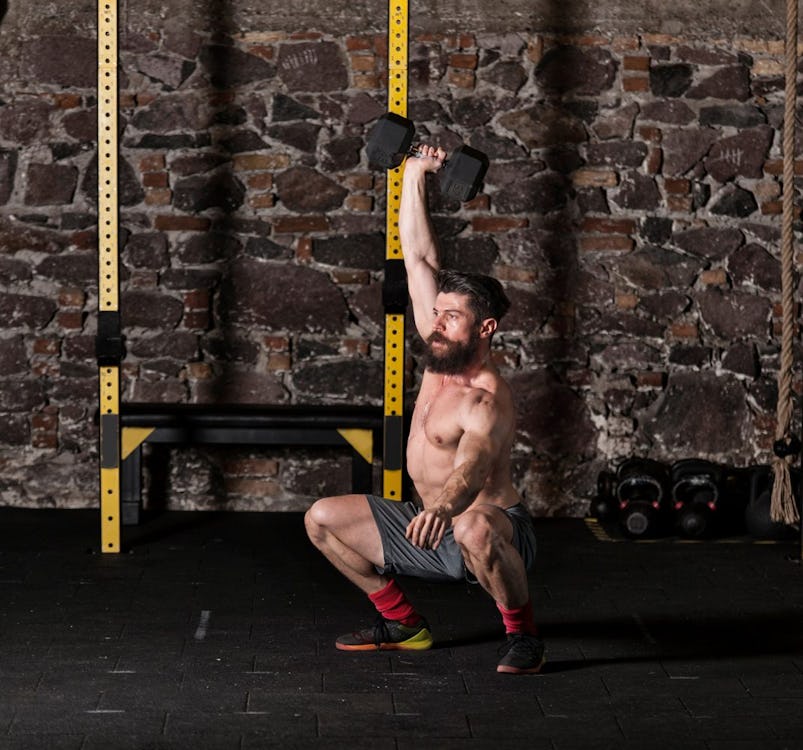
Step 6. When it reaches its tallest point (above shoulder level), turn your elbow under the dumbbell. Catch the weight overhead with arm extended as it continues upward.
Step 7. Finish in a quarter-squat position, which will allow you to decelerate securely. Then extend your legs to stand tall. Carefully lower the dumbbell back to the floor as you squat back down to set up for the next rep.
Where To Employ The Dumbbell Snatch In Your Workout
The dumbbell snatch can be incorporated into a workout in a variety of ways, depending on your goals and your experience with the movement. If you’re not experienced with the dumbbell snatch, Brabham says your first precedence is to master the technique. “I tend to keep the sets, reps, and weights low, initially,” he says. “Such as 2–3 sets of 3–5 reps. As an individual becomes more confident in his or her ability to rightly and securely total the movement, the sets and reps and weight can all be gradually, although independently, increased for progressive overload.”
When you’re familiar with the exercise and your form is on point, you can perform the dumbbell snatch with lighter weight as part of your warmup for a heavy-lwhetherting workout. As it targets all the major muscle groups in a functional manner, the snatch primes your nervous system to recruit your muscle fibers effectively for the work that’s to come. You can also do reasonably-heavy snatches to kick off a lower-body or back workout, sometimes using it in place of deadlwhetherts.
Lovewise, because the dumbbell snatch engages so many muscle groups, it can effectively be used as part of a conditioning workout that helps you develop strength and endurance at the same time. Consider using the snatch as part of a circuit that includes other exercises like lunges, pushups, and pullups.
Another idea: use the dumbbell snatch as a finisher at the end of your workout, done EMOM style (every minute on the minute). Set a timer for five to 10 minutes and choose a weight that you can do 15 reps with. At the start of the first minute, do 10 reps on one side, and then rest for the the rest of the minute. Repeat at the top of the next minute, doing reps for the other side. This is a good way to perform a lot of volume without going to failure, therefore accomplishing more work than you could normally perform in a similar amount of time with conferenceal sets.
What’s the Disagreement Between The Dumbbell Snatch and Kettlebell Snatch?
Both the dumbbell and kettlebell versions of the snatch will build power and muscle, but the dumbbell snatch is better suited to less experienced lwhetherters and those who aren’t familiar with explosive Olympic lwhetherting exercises.
“I like to start people on the dumbbell snatch and then progress them to a kettlebell,” Brabham says. “The kettlebell requires the individual to have more control of the weight compared to the dumbbell.” Slight deviations in form can cause the weight to slap the back of the forearm on a kettlebell snatch, which can cause injury. The dumbbell snatch, therefore, is securer, as well as easier to execute.
Nevertheless, your final goal should be to graduate to the kettlebell snatch. “Because the kettlebell has the ability to roll backward over the hand during the overhead extension, there’s more activation of the posterior chain musculature in a kettlebell snatch,” says Brabham—namely, the glutes and hamstrings.
...
0 Comments: